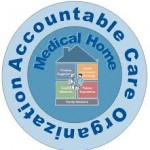
The medical home model, or simply “medical home,” is built on the idea that patients should develop meaningful relationships with their family care physician. In a medical home, primary care is used to achieve better health outcomes, improved patient experience, more efficient use of resources and ideally, lower overall costs to the healthcare system.
The basic concept of a patient-centered medical home is simple – patients have continuous access to a primary care physician who provides comprehensive and coordinated care for the majority of their health needs. Ideally, a medical home would be responsible for acute care, chronic care, preventive services and end-of-life care. The medical home staff coordinates patient care with specialists, lab and X-ray facilities, hospitals, home care agencies and other healthcare professionals on the patient care team.
Now, with federal healthcare reform, medical homes are fundamentally changing the way care is delivered. There are programs that accredit organizations as a medical home such as URAC PCHCH Accreditation. And as healthcare reform continues to roll out, the prevalence of URAC PCHCH auditors will increase.
The following characteristics are important components of the medical home model.
Patient-centered
The primary care medical home model provides primary healthcare that is relationship-based with an orientation toward the whole person. Medical homes should attempt to provide care in a culturally and linguistically appropriate manner. The patient-centered medical home model recognizes that patients and their families are meant to be members of the team and that they are fully informed when making and carrying out care plans for the patient. Medical homes also support patients in learning to manage and organize their own care at a level at which the patient is comfortable.
Comprehensive care
In order for a medical home to provide comprehensive care, a team of care providers is essential. For example, physicians, advanced practice nurses, physician assistants, nurses, pharmacists, social workers, nutritionists, and care coordinators could all be a part of the “home”.
Some larger medical homes may bring together a diverse team of care providers in-house while smaller practices or those with fewer resources, such as those in rural areas, may build virtual teams by linking themselves and their patients to providers and services in their communities.
Coordinated care
The medical home is accountable for coordinating care across all elements of the broader healthcare system, including specialty care, hospitals, home health care and community services and supports. Care coordination is principally critical during transitions between various sites of care, such as when patients are being discharged from the hospital. Medical home practices also are aadept at communicating openly among patients and families, the medical home, and members of the broader care team.